
Holiday Recycling for BC Residents in 2025
Though full of celebrations, gifts, and gatherings, the holidays can also be one of the most waste-heavy times of the year, with volumes collected being marked highest in December and January every year.
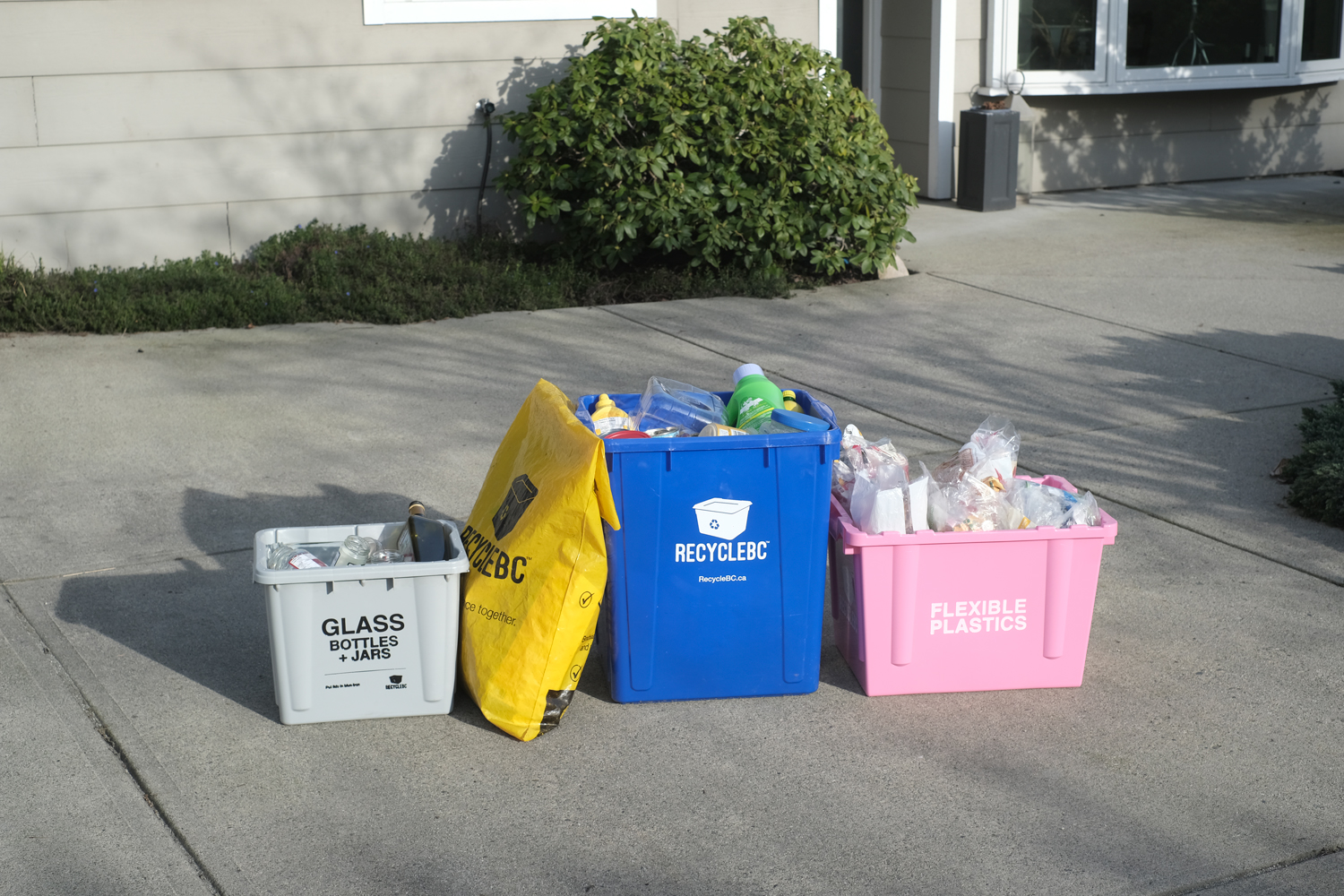
Between gift wrap, packaging, cards, and decorations, it can be tricky to know what belongs in your curbside yellow bag, blue box, grey box, and in select communities now pink box, what can be taken to depots, and what currently can’t be recycled just yet.
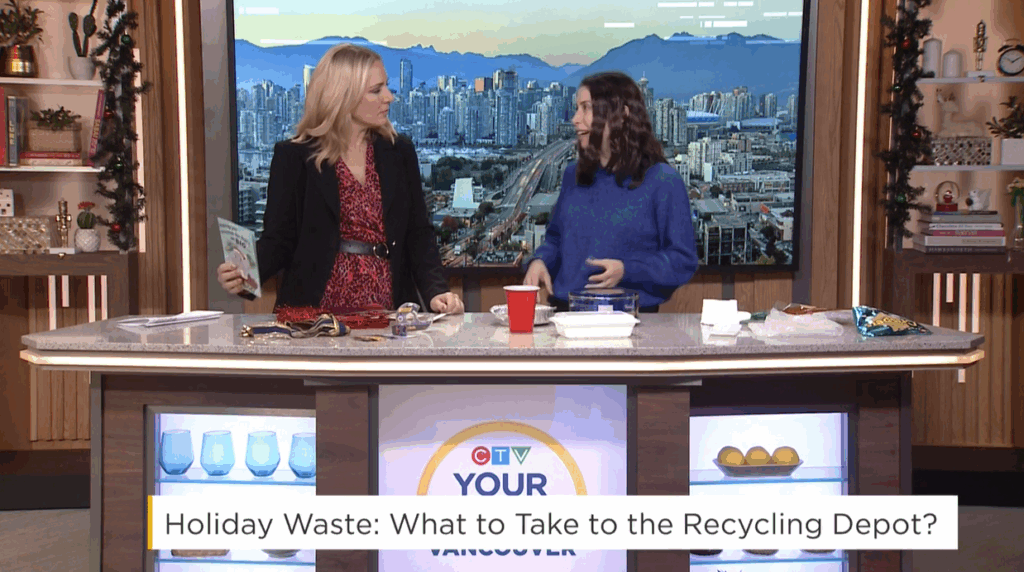
Our team made an appearance on Global News last week, and highlighted commonly confusing holiday wrapping items, sharing practical tips to help households differentiate between current recyclables and non-recyclables. As rules continue to shift and change in BC (indicating steady improvements in recycling possibilities, processes and infrastructure across the province) it is important to stay in the loop of these ebbs and flows to ensure you are well-informed on current recycling rules in your specific area!
Watch the full segment on Global News here, or see below for some updated holiday recycling tips for this year!
Yellow Bag – PAPER
YES:
Paper gift wrap, cards, envelopes, paper boxes, and paper gift bags that are mostly paper (no large amounts of glitter, foil, fabric, or felt appliques: minimal amounts under 10% are OK).
Rip test: If you can easily tear the paper with your fingers, it is most likely accepted with paper.
NO:
Fabric bows, string handles, multi-material items such as foil-lined paper or plastic-lined paper, non-paper materials, and non-rippable paper-like items.
Blue Box – CONTAINERS
YES:
Plastic tape dispensers (plastic is now considered a “container”), rigid plastic food containers (rinsed — aim to minimize food residue to under 10%), paper hot beverage cups, and plastic cold beverage cups.
A little food residue is fine — just empty containers as much as possible beforehand.
NO:
Containers full of food.
Glass containers — these must go in the Grey Box, as glass is processed in a different facility than plastics and paper. When placed in the Blue Box, glass must be re-routed, creating a longer recycling journey.
Grey Box – GLASS
YES:
All glass containers that was considered packaging (e.g. pickle jar, jam jar) for a product (pickles, jams) that was purchased.
NO:
Glass products that are not packaging, such as glass vases, glass plates, glass mugs, glass cups, mirrors, and other glass “products.”
Pink Box – FLEXIBLE PLASTICS
Note: Currently onboarded communities such as West Vancouver & Maple Ridge receive curbside collection (picked up directly from homes in the pink box) as of 2025, otherwise residents may drop off to participating depots.
YES:
Crinkly, flexible plastic packaging such as wrappers and overwrap that crumples easily. See photo examples here.
We recommend the “bag-in-bag” method, where flexible plastics are placed inside a clear liner (e.g. reused transparent bread or produce bags). This keeps materials from blowing away, remains visible to collection staff, and makes contents easy to verify.
Flexible PE #4 foam packaging (often shiny).
Whether clear & stretchable or crunchy/non-stretchy, after years of testing the many varieties of flexible plastic packaging, these mixed flexible plastics collected from BC residents can now be made into pellets through Recycle BC’s post-collection network (and are not incinerated), and is then sold to manufacturers to make new packaging and products.
NO:
Bagged flexible plastic in non-transparent or opaque bags (visibility issue). Do not use black or white bags, as contents cannot be seen or verified as accepted materials and may be treated as garbage due to safety concerns.
Multi-material items (such as paper-lined plastic).
Drop off at a Participating Depot (Keep out of the blue box):
Styrofoam (rigid white PS #6 blocks – ones you can easily snap in half), emptied styrofoam food takeout containers & styrofoam hot beverage cups.
Used household batteries. These must stay out of the blue curbside box and handled separately from all other recyclables due to its high hazard risks and special processing required. Batteries in the blue box often lead to fires and major safety risks to people handling the material down the line!
Christmas string lights, and other electronic Christmas decor (items often with a wall plug for power, or batteries). These must also stay out of the blue curbside box, and be dropped off to a participating depot due to the same safety hazards listed above.
An Informed Holiday Season for the whole Family!
Making a few simple changes during the holidays can significantly reduce waste and improve recycling efforts for future years as well. Knowing what goes where and staying up to date on recycling program improvements helps create a more sustainable season for everyone.