

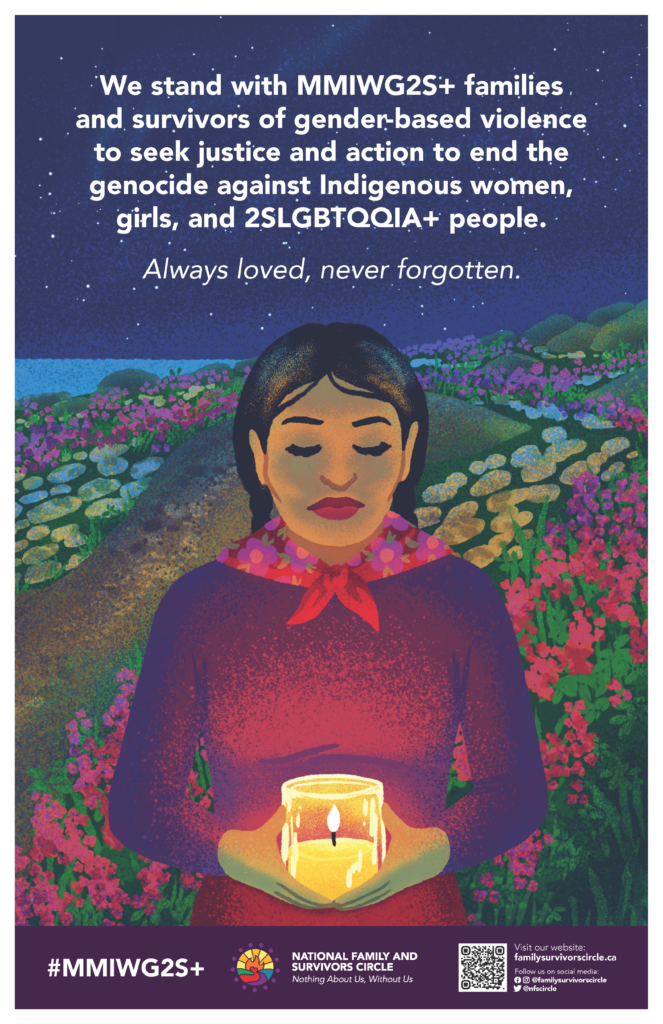
Honouring, Remembering, and Taking Action
Each year on May 5, communities across Canada come together to honour Red Dress Day. It is a day of remembrance, reflection, and action in response to the ongoing crisis of Missing and Murdered Indigenous Women, Girls and 2SLGBTQI+ people.
Across BC and beyond, red dresses displayed in public spaces serve as a powerful visual reminder of lives lost and the work that still lies ahead.
History
Red Dress Day originated from The REDress Project, an art installation created in 2010 by Métis artist Jaime Black.
Through this installation, empty red dresses were placed in public spaces such as university campuses, trees, and buildings. Each dress represents an Indigenous woman, girl or 2SLGBTQI+ person who is missing or has been murdered.
The absence within each dress speaks to both loss and presence. It reflects grief, while also calling attention to the strength of families, communities, and advocates who continue to seek justice.
Why Red?
Red was chosen intentionally.
Many Indigenous communities believe that red is the only colour spirits can see. The dresses serve as a way to call the spirits of loved ones back home.
Red also represents life, strength, and connection. It is a colour that carries both mourning and resilience.
Red Dress Day Today
Red Dress Day has grown into a nationally recognized movement that raises awareness of the disproportionate violence faced by Indigenous women, girls and 2SLGBTQI+ people.
This crisis is rooted in the ongoing impacts of colonialism, systemic racism, and historical injustices. While important steps have been taken since the 2019 National Inquiry and its 231 Calls for Justice, families and communities continue to call for meaningful, sustained action and accountability.
In 2026, organizations, Indigenous leaders, and community groups across BC continue to lead events, education, and advocacy efforts that centre Indigenous voices and experiences.
Red Dress Day is not only about awareness. It is about listening, learning, and supporting change that is led by Indigenous communities.
How to Get Involved
There are many meaningful ways to take part and show support:
Learn
Explore resources about the MMIWG2S+ crisis and ongoing initiatives:
https://cihr-irsc.gc.ca/e/52964.html
Participate
Wear red on May 5 and attend a local event, ceremony, or walk in your community.
Engage
Have conversations with friends, colleagues, and family. Take time to reflect on the history and ongoing impacts of this crisis.
Donate
Support Indigenous-led organizations that provide advocacy, healing, and community support.
You can explore verified charities through CanadaHelps: https://www.canadahelps.org
Support Indigenous voices
Follow and amplify Indigenous organizations, artists, and advocates who are leading this work year-round.
Red Dress Day Events in BC (2026)
Event details are subject to change. Please check local listings for updates.
Vancouver
Red Dress Day Ceremony – City of Vancouver
Date: May 5, 2026
Time: 11:00 a.m. to 2:00 p.m.
Location: Vancouver City Hall
This annual civic ceremony continues to bring together community members, leaders, and organizations to honour lives lost and reflect on ongoing actions.
Red Dress Day Exhibition Opening – UBC Robson Square
Date: May 5, 2026
Location: UBC Robson Square
An exhibition featuring Indigenous artists and storytelling installations is expected to return, building on past Red Dress Day programming that invites the public to gather, reflect, and connect through art.
Red Dress Awareness Tables and Memorial – Simon Fraser University
Date: May 5, 2026
Time: 12:00 p.m. to 2:00 p.m.
Locations: Burnaby, Surrey, and Vancouver campuses
Interactive memorial spaces where participants can honour loved ones and learn more about the MMIWG2S+ crisis. Community members are invited to contribute meaningful items such as flowers or notes.
Moving Forward Together
Red Dress Day is a time to honour the lives lost and stand with families and communities who continue to seek justice.
It is also an opportunity to reflect on how each of us can contribute to meaningful change. Whether through learning, listening, or supporting Indigenous-led initiatives, every action helps build awareness and accountability.
By coming together, we strengthen our shared commitment to respect, safety, and dignity for all.